Vitamins: Forms and Natural Sources
Understanding Vitamins
Vitamins are organic compounds that are essential for normal metabolic function, immune function, growth, and other physiological processes. Unlike minerals, which are inorganic elements, vitamins are synthesised by plants or animals and contain carbon in their molecular structure.
Vitamins cannot be synthesised by the human body (with rare exceptions like vitamin D), so they must be obtained from dietary sources. Understanding the different forms of vitamins and their food sources provides foundation knowledge for recognising food composition and nutrient distribution.
Fat-Soluble Vitamins
Fat-soluble vitamins dissolve in fat and are stored in the body's fatty tissues. They require dietary fat for absorption.
Vitamin A
Forms: Retinol (animal sources), beta-carotene (plant sources). Sources: Liver, egg yolks, fatty fish, dark leafy greens, orange and yellow vegetables. Role: Vision, immune function, skin health.
Vitamin D
Forms: Cholecalciferol (D3, animal), ergocalciferol (D2, plant). Sources: Fatty fish, egg yolks, mushrooms, fortified foods. Role: Calcium absorption, bone mineralisation, immune regulation.
Vitamin E
Forms: Multiple tocopherols and tocotrienols. Sources: Vegetable oils, nuts, seeds, leafy greens. Role: Antioxidant, cell protection.
Vitamin K
Forms: K1 (phylloquinone, plants), K2 (menaquinones, bacteria/animals). Sources: Leafy greens, cruciferous vegetables, fermented foods. Role: Blood clotting, bone mineralisation.
Water-Soluble Vitamins
Water-soluble vitamins dissolve in water and are not stored extensively in the body, so regular dietary intake is important. They are generally not toxic even at high levels.
Vitamin B1 (Thiamine)
Sources: Whole grains, pork, legumes, nuts, seeds. Role: Energy metabolism, nerve function.
Vitamin B2 (Riboflavin)
Sources: Eggs, dairy, almonds, mushrooms, leafy greens. Role: Energy production, antioxidant protection.
Vitamin B3 (Niacin)
Sources: Chicken, tuna, turkey, peanuts, mushrooms. Role: DNA repair, energy metabolism.
Vitamin B5 (Pantothenic Acid)
Sources: Mushrooms, avocado, eggs, chicken. Role: Hormone synthesis, energy metabolism.
Vitamin B6 (Pyridoxine)
Sources: Chickpeas, salmon, potatoes, bananas, chicken. Role: Amino acid metabolism, neurotransmitter synthesis.
Vitamin B12 (Cobalamin)
Sources: Meat, fish, dairy, eggs, fortified foods. Role: Red blood cell formation, nervous system function.
Folate (B9)
Sources: Leafy greens, legumes, asparagus, fortified grains. Role: DNA synthesis, cell division.
Vitamin C (Ascorbic Acid)
Sources: Citrus, berries, bell peppers, broccoli, kiwifruit. Role: Immune function, collagen synthesis, iron absorption enhancement.
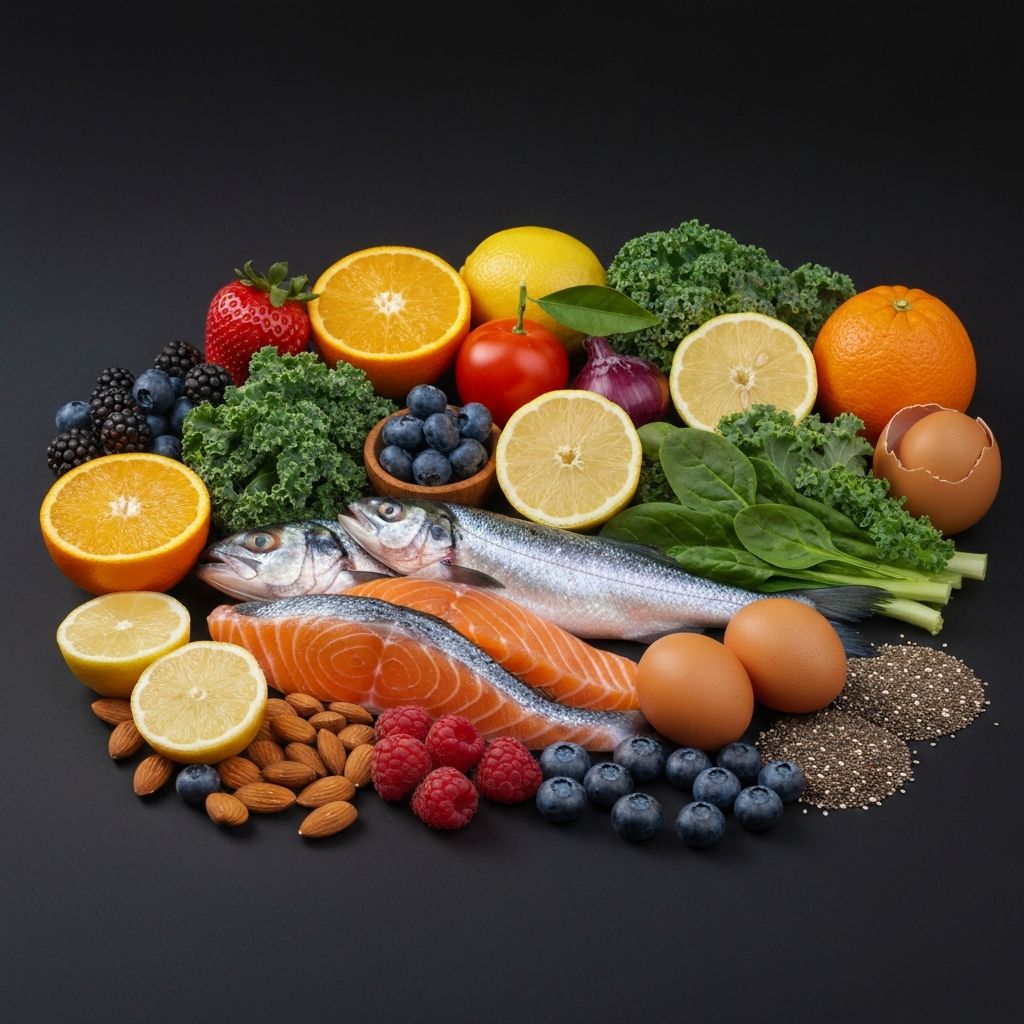
Natural vs Synthetic Forms
Vitamins can be obtained from food sources (natural) or synthesised in laboratories (synthetic). From a biochemical perspective, the vitamin molecule itself is identical whether it comes from food or synthesis. However, the food matrix—the surrounding nutrients, fibre, and other compounds—differs significantly.
Whole foods provide vitamins within their natural context, alongside other beneficial compounds. Isolated or synthetic vitamins, when taken as supplements, lack this matrix. For most people, obtaining vitamins from diverse whole foods provides them in their intended biological context.
Bioavailability Considerations
The bioavailability of vitamins from food varies based on:
- Food form: Whole foods vs processed, raw vs cooked
- Accompanying compounds: Fat content (for fat-soluble vitamins), vitamin C (enhances iron absorption)
- Individual factors: Digestive health, age, medications, genetic variations
- Preparation: Storage, cooking time, and method all affect nutrient retention
Key Takeaways
Educational Information: Vitamins are essential organic compounds found in diverse food sources. Fat-soluble vitamins (A, D, E, K) require dietary fat for absorption, while water-soluble vitamins (B complex, C) do not. Understanding where vitamins naturally occur in foods helps recognise food composition diversity.
This is informational content only. Individual vitamin needs vary based on age, health status, diet, and other factors. For personalised nutritional questions, consult qualified healthcare professionals.