Minerals in Everyday British Foods
What Are Minerals?
Minerals are inorganic elements that originate from soil and water. Unlike vitamins (organic compounds), minerals have no carbon in their molecular structure. They are essential micronutrients that support bone structure, muscle contraction, nerve transmission, hormone production, and countless enzymatic processes.
Understanding the mineral content of everyday British foods helps recognise the diversity of food composition and how different diets provide varying mineral profiles.
Key Minerals and British Food Sources
Iron
British sources: Red meat, poultry, fish, eggs, legumes, fortified cereals. Role: Oxygen transport in blood, enzyme function.
Calcium
British sources: Dairy products, leafy greens, canned fish with bones, fortified plant milks. Role: Bone structure, muscle contraction, nerve transmission.
Zinc
British sources: Meat, shellfish, legumes, seeds, whole grains. Role: Immune function, protein synthesis, wound healing.
Magnesium
British sources: Leafy greens, nuts, seeds, whole grains, legumes. Role: Muscle function, energy production, bone health.
Potassium
British sources: Potatoes, bananas, beans, spinach, tomatoes, dairy. Role: Fluid balance, nerve transmission, heart function.
Phosphorus
British sources: Meat, fish, dairy, eggs, legumes. Role: Bone mineralisation, energy metabolism.
Iodine
British sources: Fish, dairy, eggs, iodised salt. Role: Thyroid hormone synthesis, metabolism regulation.
Selenium
British sources: Fish, meat, eggs, Brazil nuts, legumes. Role: Thyroid function, antioxidant protection.
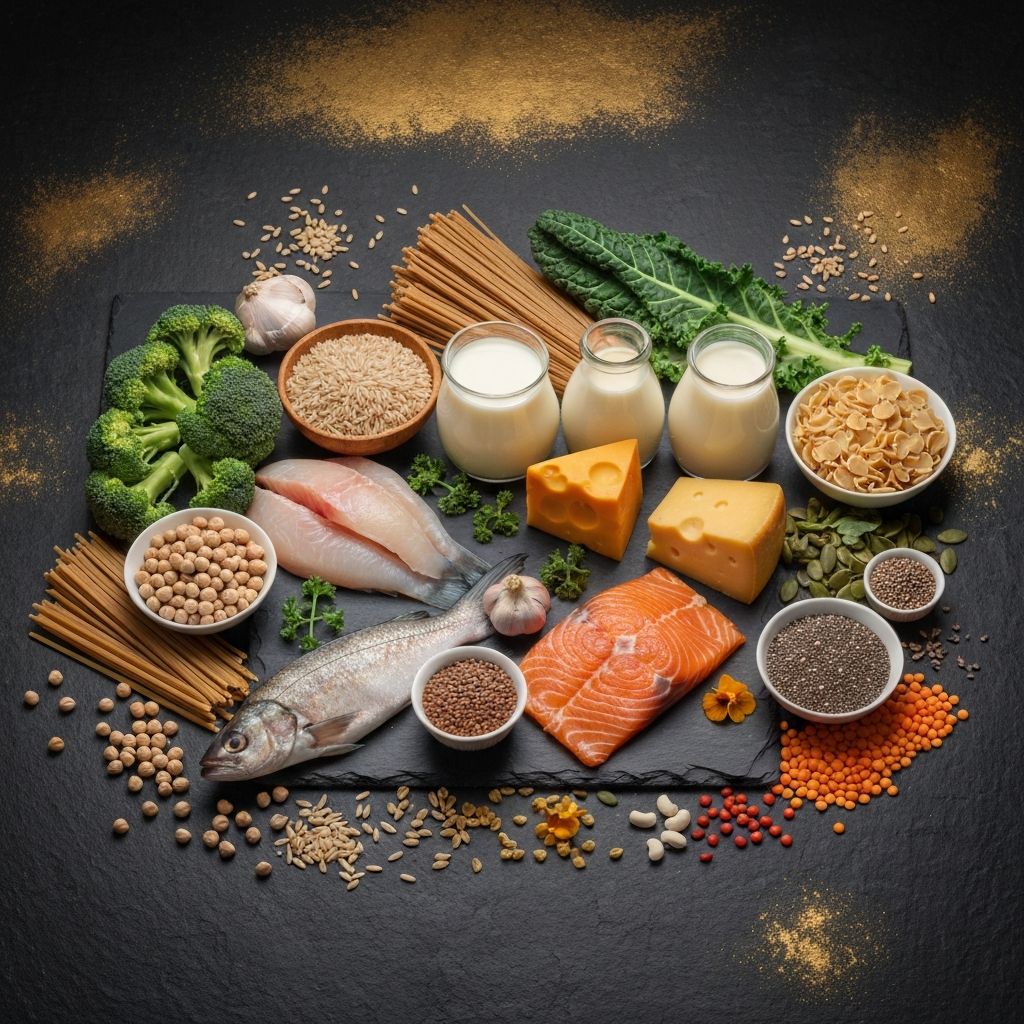
Bioavailability of Minerals
Like vitamins, the bioavailability of minerals—the proportion absorbed and utilised by the body—varies significantly based on food source and preparation:
- Haem vs non-haem iron: Iron from animal sources (haem iron) is more readily absorbed than iron from plant sources (non-haem iron)
- Calcium inhibitors: Some compounds like oxalates (in spinach) and phytates (in grains) can reduce calcium absorption
- Vitamin D and calcium: Vitamin D significantly enhances calcium absorption
- Cooking effects: Heat processing can affect mineral availability and absorption
- Food combinations: Some mineral pairs enhance or inhibit each other's absorption
Mineral Content Variation
The mineral content of foods varies based on multiple factors:
Soil quality: The mineral content of plant foods directly reflects the mineral content of the soil where they were grown. Different regions and farming practices result in different mineral levels.
Animal feed: For animal products, the mineral content depends on what the animal consumed. Grass-fed versus grain-fed livestock, for example, can have different nutrient profiles.
Processing and storage: Food processing, storage time, and cooking methods all affect the final mineral content of what is consumed.
Common Minerals in UK Diets
| Mineral | Common British Sources | Typical Dietary Pattern |
|---|---|---|
| Iron | Red meat, beans, fortified cereals | Generally adequate in most diets; variation across groups |
| Calcium | Dairy, fortified alternatives, leafy greens | May be lower if dairy consumption is limited |
| Zinc | Meat, seafood, legumes | Correlates with protein intake patterns |
| Iodine | Fish, dairy, eggs | Varies depending on seafood and salt consumption |
| Selenium | Fish, meat, eggs | Generally adequate in varied diets |
Key Takeaways
Educational Information: Minerals are inorganic micronutrients found throughout everyday British foods, each with specific biological roles. The mineral content of foods varies based on soil quality, farming practices, animal feed, and food processing. Understanding this variation helps recognise food composition diversity.
This is informational content only. Individual mineral needs vary significantly based on age, health status, activity level, and other factors. For personalised nutritional guidance, consult qualified healthcare professionals.