Synergistic Nutrient Pairs
Understanding Nutrient Synergy
Nutrient synergy occurs when the presence of one nutrient enhances the absorption or function of another. This is one reason why whole foods, which contain multiple nutrients in their natural matrix, are scientifically important—the nutrients work together.
Understanding these interactions provides insight into why diverse, whole-food-based dietary patterns have been associated with positive health outcomes in scientific research.
Evidence-Based Nutrient Pairs
Iron + Vitamin C
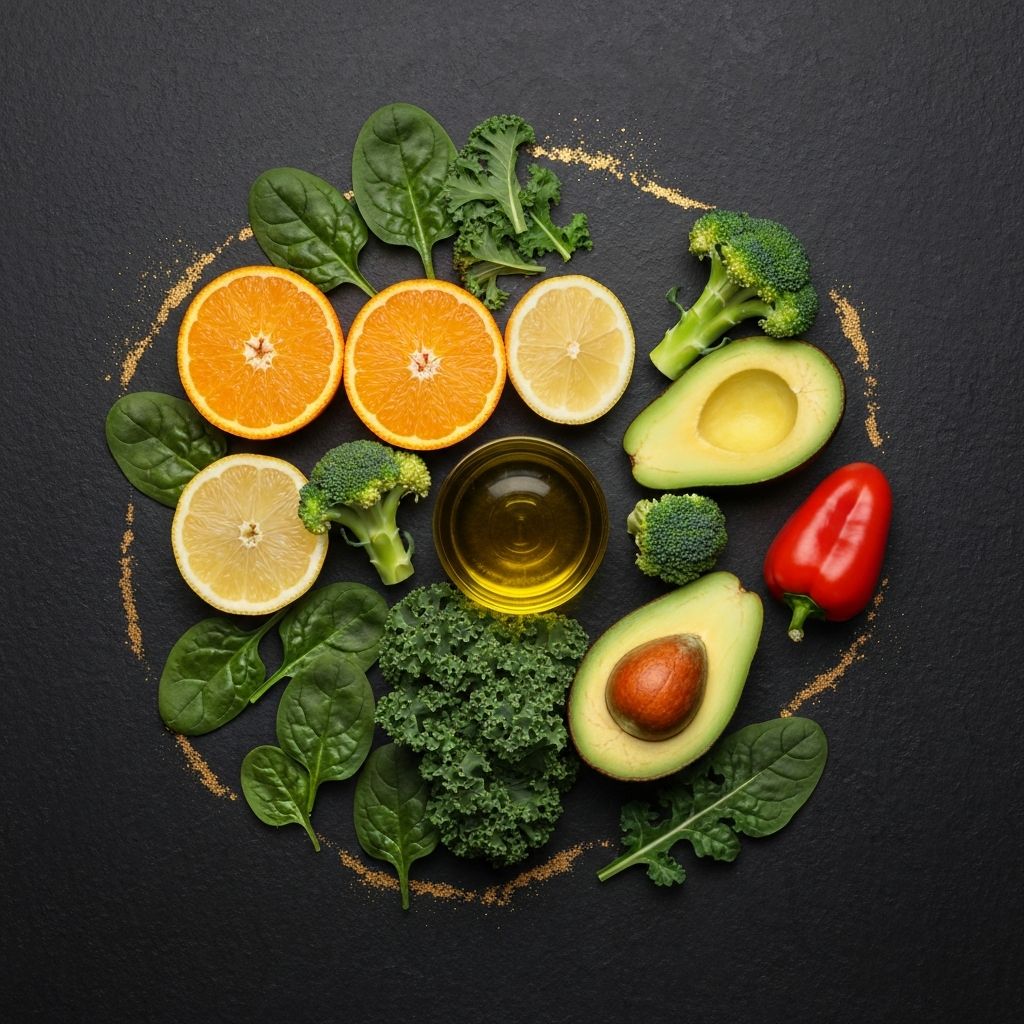
Mechanism: Vitamin C (ascorbic acid) reduces iron and enhances its absorption, particularly for non-haem iron from plant sources. Example foods: Spinach + citrus, beans + bell peppers, lentils + tomatoes.
Fat-Soluble Vitamins + Dietary Fat
Mechanism: Vitamins A, D, E, and K require dietary fat for absorption and transport. Example foods: Leafy greens + olive oil, sweet potato + avocado, fatty fish naturally provides both vitamin D and fat.
Calcium + Vitamin D
Mechanism: Vitamin D enhances intestinal calcium absorption and is essential for calcium regulation. Example foods: Fatty fish provides both, or dairy products with vitamin D fortification.
Beta-Carotene + Fat
Mechanism: Beta-carotene (pro-vitamin A) requires fat for absorption from plant sources. Example foods: Carrots + butter or oil, sweet potato + olive oil, broccoli + cheese.
Lycopene + Fat
Mechanism: Lycopene absorption is enhanced by dietary fat; cooking also increases availability. Example foods: Tomato sauce with olive oil, cooked tomatoes with cheese or meat.
Zinc + Protein
Mechanism: Zinc from protein-containing foods is more bioavailable; protein aids overall nutrient absorption. Example foods: Meat, fish, legumes with grains, nuts and seeds.
Folate + B12
Mechanism: These B vitamins work together in cellular processes; both are important for similar functions. Example foods: Animal products provide B12; leafy greens provide folate.
Magnesium + Vitamin B6
Mechanism: These nutrients function together in amino acid metabolism and nervous system function. Example foods: Chickpeas, nuts, seeds, whole grains.
Why Whole Foods Matter
Whole foods naturally contain multiple nutrients in proportions and combinations refined by evolution and plant/animal physiology. When nutrients are isolated and concentrated (as in supplements), they lack this natural matrix of supporting compounds.
For example, an orange contains not just vitamin C, but also fibre, polyphenols, and other compounds. The synergy between these components contributes to the biological activity of the whole food in a way that isolated vitamin C alone cannot replicate.
Practical Applications
Understanding nutrient synergy explains why scientific literature often recommends:
- Combining diverse whole foods rather than relying on any single food source
- Including healthy fats with meals to enhance absorption of fat-soluble nutrients
- Pairing plant-based iron sources with vitamin C for improved absorption
- Eating whole foods as the foundation of nutrient intake
- Recognising that food combinations create complementary nutrient profiles
Key Takeaways
Educational Information: Nutrient synergy demonstrates that nutrients function more effectively when consumed together in foods. Whole foods naturally contain complementary nutrient combinations. Understanding these interactions provides scientific context for why diverse, whole-food-based dietary patterns are supported by nutritional science.
This is informational content only and does not constitute dietary advice. Individual nutritional needs vary. For personalised guidance, consult qualified healthcare professionals.