Nutrient Density Concept Explained
Defining Nutrient Density
Nutrient density is a scientific concept that describes the concentration of micronutrients (vitamins and minerals) relative to the energy (calorie) content of food. It's a way to evaluate the nutritional value of foods based on their micronutrient profile.
A nutrient-dense food provides substantial amounts of vitamins, minerals, and other beneficial compounds relative to its caloric content. This concept helps in understanding food composition from a scientific perspective.
Nutrient-Dense Food Examples
| Food Category | Examples | Why Nutrient-Dense |
|---|---|---|
| Leafy Greens | Spinach, kale, chard | High in vitamins K, folate, magnesium, iron; low in calories |
| Berries | Blueberries, raspberries, strawberries | Rich in vitamin C, antioxidants, fibre; moderate calories |
| Fatty Fish | Salmon, mackerel, sardines | Omega-3 fatty acids, vitamin D, selenium, high-quality protein |
| Legumes | Beans, lentils, chickpeas | Plant-based protein, fibre, iron, magnesium, zinc |
| Cruciferous Vegetables | Broccoli, cauliflower, Brussels sprouts | Vitamin C, sulforaphane, fibre, minerals; low calories |
| Nuts & Seeds | Almonds, walnuts, chia seeds, flaxseeds | Healthy fats, protein, vitamin E, minerals; calorie-dense but nutrient-rich |
| Eggs | Whole eggs, especially yolks | Complete protein, choline, lutein, vitamins and minerals |
Nutrient Density vs Energy Density
Energy density refers to the number of calories per unit weight of food. High-energy-dense foods are calorie-rich relative to their weight. This is distinct from nutrient density.
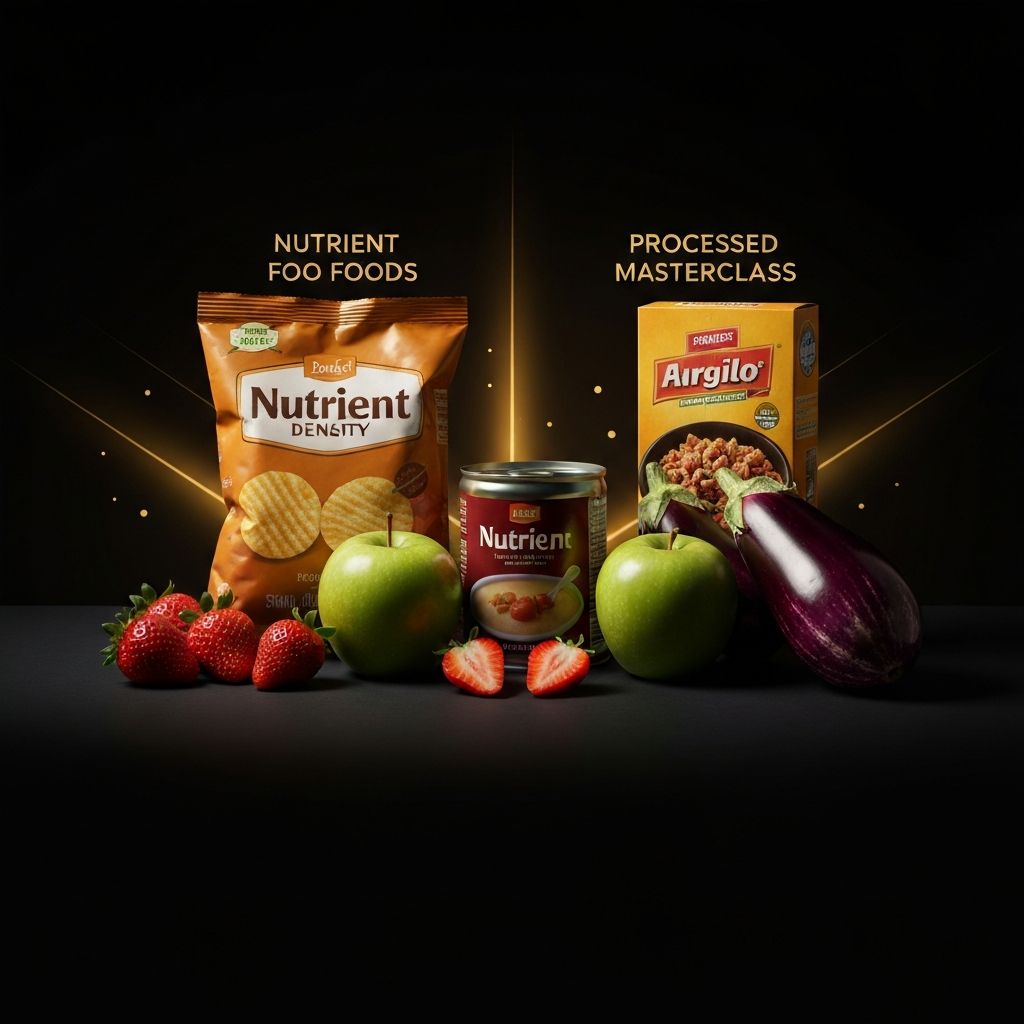
Key distinction: A food can be nutrient-dense without being energy-dense (leafy greens), nutrient-dense and energy-dense (nuts, fatty fish), or low in both dimensions (sugar, processed foods).
Scientific importance: Understanding the difference between these concepts is crucial for recognising that high caloric content doesn't necessarily mean low nutritional value, and vice versa.
Evaluating Foods Systematically
When evaluating food from a nutritional science perspective, consider:
- Vitamin content: What vitamins does the food contain, and in what amounts?
- Mineral profile: Which minerals are present, and are they bioavailable?
- Fibre content: How much dietary fibre does the food provide?
- Phytonutrient variety: What bioactive plant compounds does it contain?
- Protein quality: If present, what is the amino acid profile?
- Fat composition: What types of fats are present?
- Processing level: How processed is the food relative to its whole form?
Practical Applications
Understanding nutrient density helps explain:
- Why dietary patterns featuring diverse whole foods are supported by nutritional science
- Why some foods are scientifically recognised as particularly valuable nutritional sources
- How to evaluate foods based on their micronutrient profile, not just macronutrients
- Why processing and cooking methods affect the nutritional value of foods
- How individual dietary patterns can be evaluated from a micronutrient perspective
Key Takeaways
Educational Information: Nutrient density is a scientific measure of micronutrient concentration relative to energy content. Understanding this concept helps evaluate foods based on their nutritional composition. However, nutrient density is one aspect of food evaluation and is not deterministic of individual dietary needs or outcomes.
This is informational content only. Individual nutritional needs are complex and multifactorial. For personalised dietary evaluation, consult qualified healthcare professionals.